
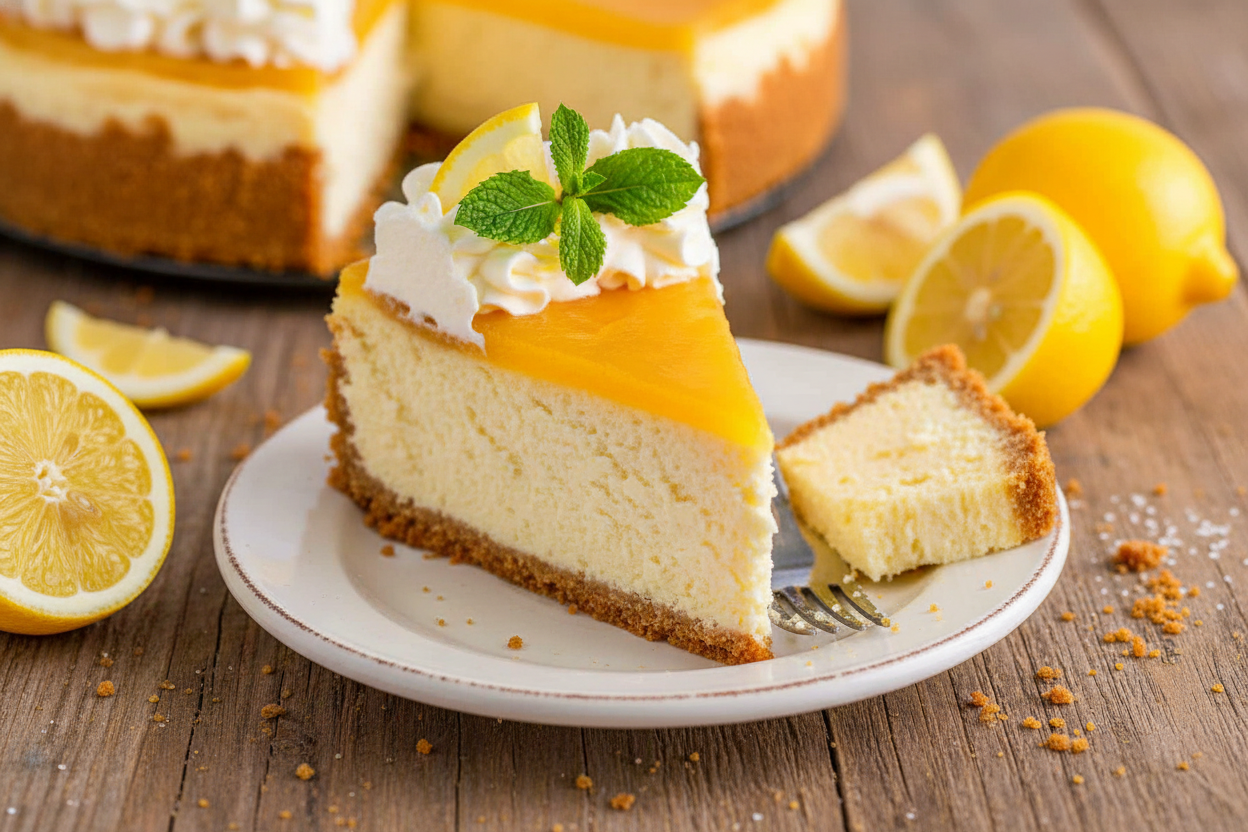
A Lemon Cheesecake That Won’t Crack Your Heart
The first cheesecake I ever made looked like a map of a broken road. Cracks everywhere. I almost cried.
Then my neighbor, old Mrs. Gable, knocked on my door. She handed me a piece of her own cheesecake, smooth as glass. “Water bath,” she said, and winked. I still laugh at that memory. She made it sound like a secret handshake.
Doesn’t that smell amazing? Lemon and cream cheese together is like a sunbeam in a bowl.
Have you ever tried a water bath for baking? I’d love to hear your stories in the comments below.
What Is a Water Bath, Anyway?
A water bath is simple. You put your cheesecake pan inside a bigger pan. Then you pour hot water into the bigger pan, up the sides of the cheesecake pan.
The water keeps the oven moist and gentle. It stops the cheesecake from drying out. And that helps stop cracks. Why does this matter? Because a cracked cheesecake still tastes good, but a smooth one feels like a hug.
*Fun fact: Professional bakers call a water bath a “bain-marie.” I just call it a way to show your cheesecake some love.*
Have you ever baked a cheesecake without a water bath? What happened?
No Bigger Pan? No Problem
I remember the first time I tried a water bath. I didn’t own a big roasting pan. I panicked. Then I remembered: you can just put a smaller pan of water on the oven rack right underneath the cheesecake.
The steam still rises and does the job. It’s not perfect, but it works. I still use this trick when my big pan is full of potatoes. Why this matters: you don’t need fancy equipment to make something wonderful. A little creativity saves the day.
What’s your favorite kitchen shortcut? Tell me in the poll I’ll put at the end.
Lemon Curd Makes It Sing
Store-bought lemon curd is fine. I use it all the time. But a little fresh lemon zest and a squeeze of juice take it to another level. Just stir a teaspoon of zest into the batter.
And that cup of sour cream? It adds tang and creaminess. Don’t skip it. The lemon and sour cream together taste like a bright morning. I always think of my grandma’s lemonade stand when I bake this.
Does your family have a favorite lemon dessert? I’d love to know.
The Gentle Cool-Down Secret
Here’s a tip Mrs. Gable taught me: after the cheesecake bakes, turn off the oven. Crack the door open. Let it sit inside for an hour.
This slow cool-down stops sudden shrinking. Sudden shrinking causes cracks. It’s like letting a hot pan of soup cool before you put it in the fridge. Patience pays off. I know, waiting is hard. But your cheesecake will thank you.
What’s the hardest part of baking for you — the waiting or the mixing? Drop your answer below.
Share Your Lemon Cheesecake Stories
I hope you try a water bath with your next lemon cheesecake. It’s a small step that makes a big difference. And if your cheesecake cracks anyway? That’s okay. Cover it with extra lemon curd. Nobody will know.
I still remember the first time I made a smooth one. I cried happy tears. Baking is full of tiny triumphs. I want to hear about yours. Tell me one baking win in the comments.
Instructions
Step 1: Crush graham crackers into fine crumbs. Mix with melted butter and a pinch of sugar. Press the mixture hard into a springform pan. (Tip: use a flat-bottomed glass to press firmly so the crust doesn’t crumble.)
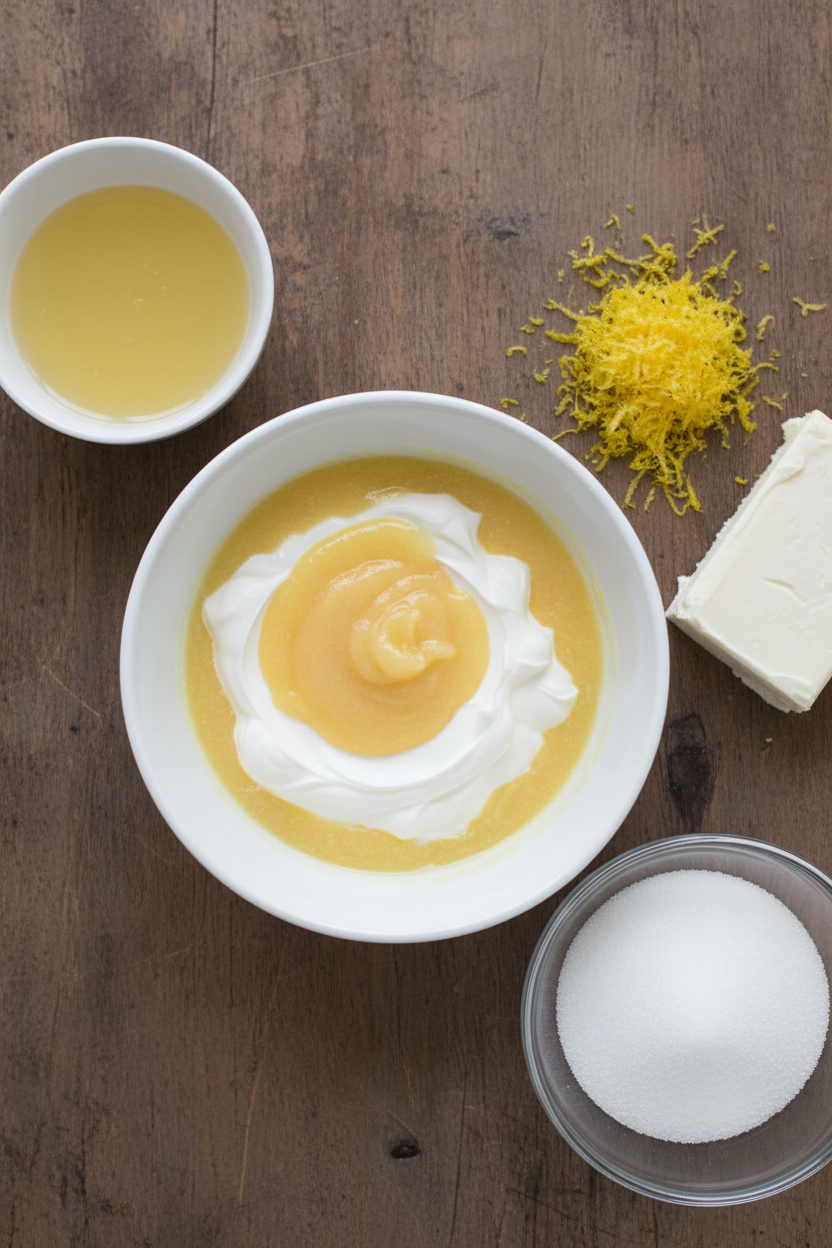
Step 2: Beat cream cheese until it is smooth and fluffy. Add sugar, eggs, lemon zest, and a splash of lemon juice. Stir in one cup of sour cream. My grandma always let her ingredients sit out first. I still laugh at the time she forgot and got lumpy batter.
Step 3: Wrap the springform pan in a double layer of heavy-duty foil. Place it inside a larger roasting pan. Pour hot water carefully until it reaches halfway up the sides. (The water bath keeps the top from cracking open.) What is your favorite lemon dessert? Share below!
Step 4: Bake at 325 degrees Fahrenheit for about 50 minutes. Turn off the oven and crack the door open. Let the cheesecake cool slowly for one hour. Then pop it in the fridge overnight for the best texture.
Creative Twists
… Swirl a few spoonfuls of blueberry jam into the batter before baking. The sweet berries pair perfectly with lemon.
… Top the cooled cheesecake with fluffy toasted meringue. It turns your dessert into a lemon meringue dream.
… Swap the graham cracker crust for crushed ginger snaps. The spicy snap adds a cozy kick. Which one would you try first? Comment below!
Serving & Pairing Ideas
Slice the cheesecake cold and serve with a spoonful of fresh berries. A little dust of powdered sugar makes it pretty. You could also add a dollop of lightly sweetened whipped cream. For a bright finish, grate a little extra lemon zest over each slice. Which would you choose tonight?

Title 1
I remember my first lemon cheesecake. I was so proud of that golden top. But I wrapped it in thin foil and put it in the fridge. The next day it tasted like last night’s onions. Lesson learned. Always use a tight wrap of plastic first, then foil. This keeps out fridge smells and keeps the cake moist.
For the freezer, slice the cheesecake first. Wrap each slice in plastic, then foil, then pop them in a zip bag. They keep for two months. When you want a piece, just thaw it in the fridge overnight. Batch cooking is a lifesaver. Make two cheesecakes at once. Keep one for now, freeze one for a busy week. That way you always have a treat ready. It saves money and stress. Have you ever tried storing it this way? Share below!
*Fun fact: Lemon zest packs more flavor than lemon juice and won’t make your filling watery.*
Title 2
Three problems always show up with lemon cheesecake. First, cracks. The top splits like a dry riverbed. I once pulled a cheesecake out too fast from the oven. Cold air hit it and crack. Water bath fixes this. The steam keeps the oven moist. Second, a soggy crust. This happens when butter seeps into the pan. Wrap the outside of your springform pan in heavy foil before the water bath. Third, a dull lemon taste. Use fresh lemon zest and real lemon juice. Bottled juice is flat and sad.
Fixing these problems matters because it builds your confidence. When you know how to stop cracks, you stop being scared of cheesecake. You become the baker who brings the perfect dessert. Good lemon flavor matters because it makes the dessert sing. A flat cheesecake is just sweet cream. A bright lemon cheesecake is a party on your tongue. Which of these problems have you run into before?
Your Quick Questions
Why do I need a water bath for lemon cheesecake?
A water bath is warm, gentle steam that surrounds your cheesecake. This keeps the oven air from drying out the top and causing cracks. The cream cheese batter bakes slowly and evenly. Without it, your cheesecake might puff up, then sink and crack. Use a larger pan on a rack below if your springform pan is too big. The pan of water still creates the steam you need for a smooth, shiny top.
Can I use bottled lemon juice instead of fresh?
You can, but the flavor will be different. Bottled lemon juice is processed and loses that bright, sharp taste. Fresh lemon juice and lemon zest give you real lemon flavor. Zest has oils that smell amazing. If you only have bottled juice, add extra zest to boost the taste. Or stir in a spoonful of store-bought lemon curd for a rich, tangy kick. Fresh is best, but bottled works in a pinch.
How do I keep the crust from getting soggy?
Wrap the outside of your springform pan tightly with a double layer of heavy-duty foil. Make sure the foil goes up the sides and over the rim. This keeps water from the water bath from seeping in through the seams. Also, pre-bake your crust for 10 minutes before adding the cream cheese filling. That sets the butter and makes a firm barrier. A dry crust stays crunchy against the creamy filling. Which tip will you try first?
Title 4
Well, sweetie, I think we have covered everything. From wrapping to freezing, from cracks to crusts. You have all the tools now to make a perfect lemon cheesecake. Remember, every baker makes mistakes. Even I still drop a pan now and then. The important thing is to keep trying and to share what you make. I would love to hear how yours turns out. Have you tried this recipe? Come back and tell me all about it in the comments.
Happy cooking!
—Lily Simmer

Simple Lemon Cheesecake Water Bath Tips
Description
Tips for making a simple lemon cheesecake with a water bath to prevent cracks. Easy with simple steps.
Ingredients
Instructions
- Wrap springform pan tightly in heavy-duty foil to prevent leaks.
- Use room temperature cream cheese and eggs for a smooth texture.
- Pour hot water halfway up sides of pan placed in a larger roasting pan.
- Bake at low temperature (325°F) then turn off oven, crack door, and cool gradually to avoid cracks.
- Add fresh lemon zest and juice for bright flavor; incorporate gently.
- Chill completely before slicing for clean cuts.
General Tips for Lemon Cheesecake with Water Bath
Notes
- Wrap springform pan tightly in heavy-duty foil to prevent leaks.
- Use room temperature cream cheese and eggs for smooth texture.
- Pour hot water halfway up sides of pan in a larger roasting pan.
- Bake at low temperature (325°F) then turn off oven, crack door, and cool gradually to avoid cracks.
- Add fresh lemon zest and juice for bright flavor; incorporate gently.
- Chill completely before slicing for clean cuts.