
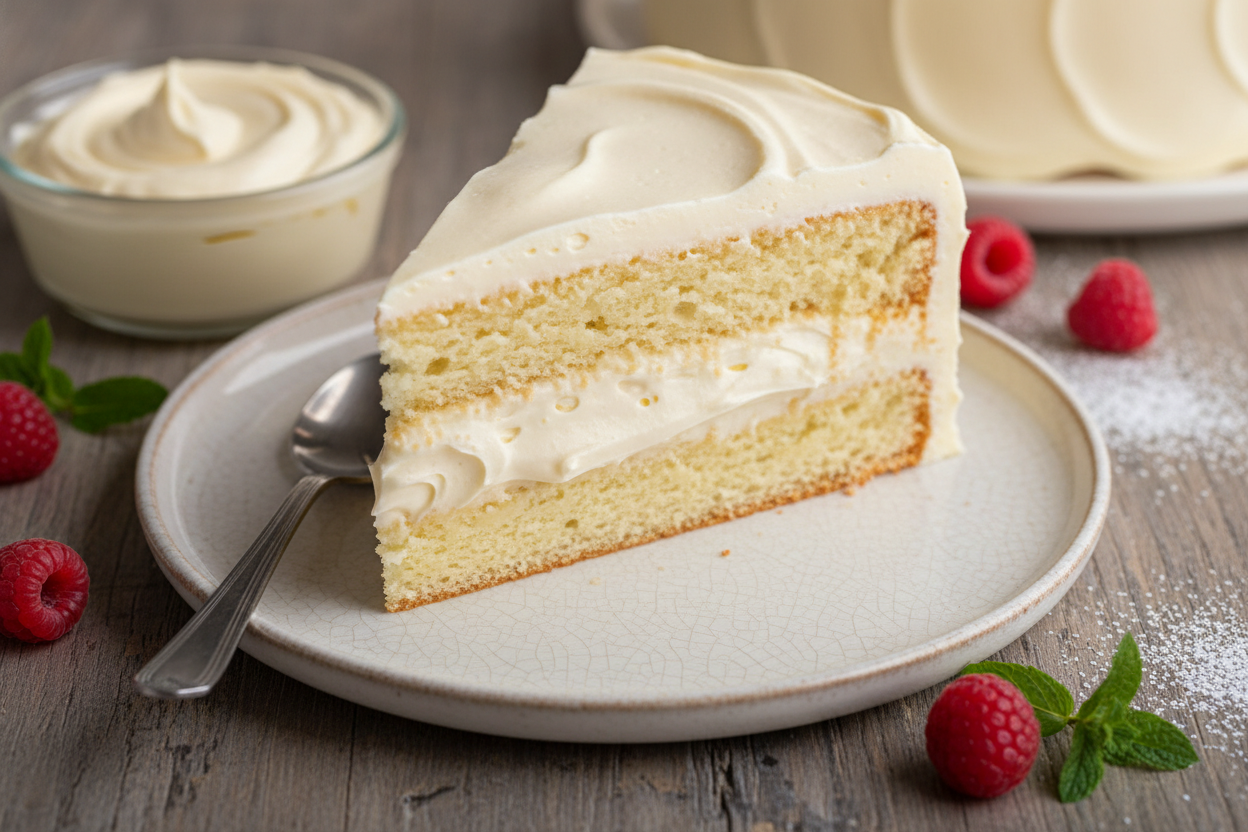
A Little Story
The first time I made Bavarian cream I was twenty-two. I had no idea what I was doing. My grandma watched from the kitchen door, shaking her head with a smile. She said, “Lily, you’re making pudding, not cement.” I still laugh at that. She showed me how to fold the whipped cream in slow, gentle strokes. That’s when I learned that good things take patience.
Have you ever made something that felt too fancy? I hope this recipe changes your mind. It looks fancy, but it’s really just a creamy, wobbly cloud of vanilla goodness.
What Makes It So Special
Bavarian cream is like a cross between pudding and mousse. It’s smooth and light, but it holds its shape. That’s because of two things: egg yolks and gelatin. The yolks make it rich. The gelatin gives it that gentle jiggle.
And the vanilla? Oh, the vanilla. Using a real bean makes the flavor warm and cozy. Does it smell amazing? Yes, yes it does. *Fun fact: vanilla beans come from orchids. They are the only fruit in the orchid family that we eat.*
The Secret Step That Scares People
Tempering the eggs sounds scary. It’s just a fancy word for warming them up slowly. If you pour hot milk into cold yolks all at once, you’ll get sweet scrambled eggs. Nobody wants that. So you pour a little hot milk into the yolks while whisking fast. Then add that mixture back into the pot.
It’s like making new friends. You start slow. Then you get along perfectly. I bet you can do this. What’s a kitchen trick that scared you the first time?
Why This Matters
Learning to make a custard teaches you patience. You can’t rush it or walk away. Stirring gently over low heat builds a skill you’ll use for puddings, ice cream, and even pies. That’s one “why this matters.”
Also, homemade desserts taste better than store-bought. You control the sugar and the vanilla. You know exactly what’s inside. That’s the second “why this matters.” Food made with your own hands always feels more special.
A Cool Trick for Serving
Once your Bavarian cream is set, you can unmold it. Run a thin knife around the edges. Dip the bottom of the mold in warm water for ten seconds. Place a plate on top, flip it over, and give it a gentle shake. Out it comes, smooth and beautiful.
Or just spoon it into pretty glasses. No fuss. My grandkids love it served with fresh berries and a tiny cookie on top. Would you add fruit, chocolate, or eat it plain?
Your Turn to Try
I hope you give this recipe a go. It’s not hard, just a little patient. The first bite will remind you why handmade things are worth the effort. Let me know how it turns out. Did the kids love it? Did your family ask for seconds?
And here’s one last thought: the best part about cooking is sharing. So make this for someone you care about. Then sit down together and enjoy every spoonful.
Instructions
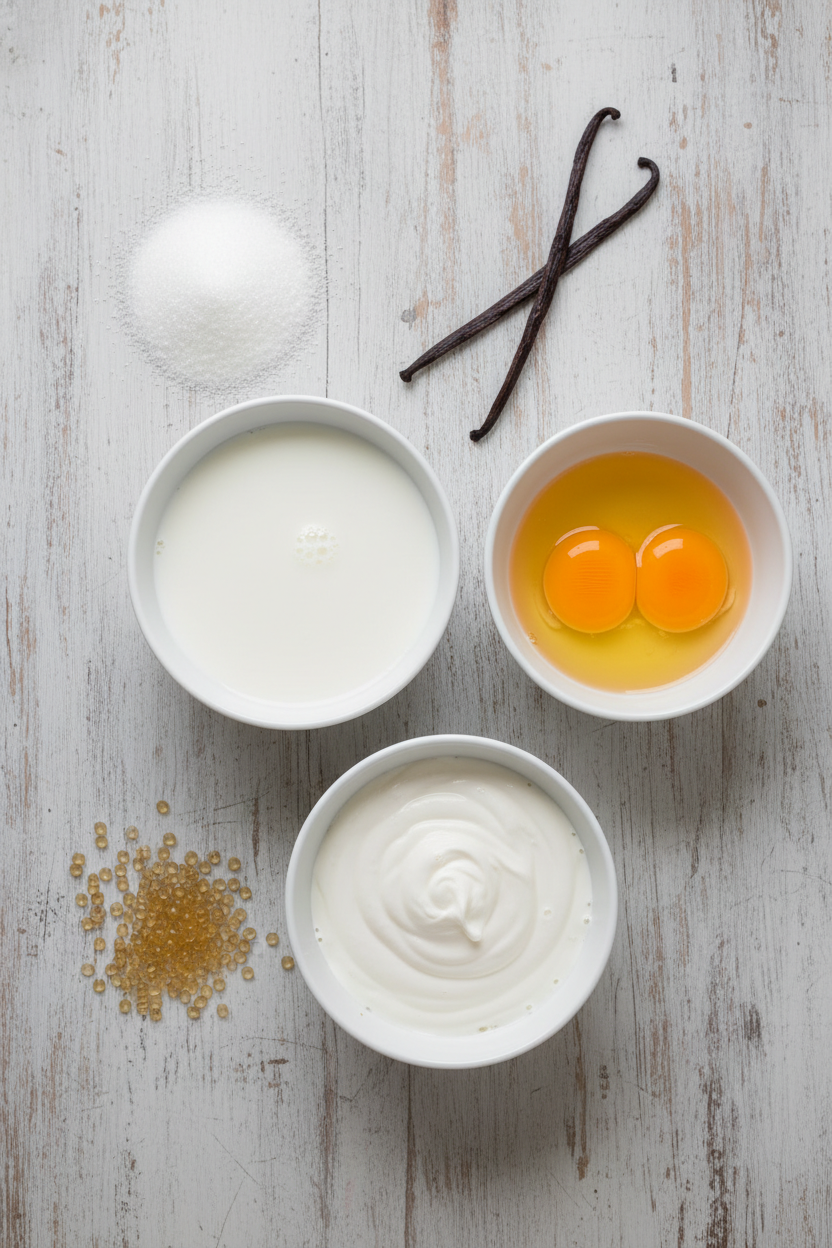
Step 1: Sprinkle the gelatin over cold water in a small bowl. Let it sit for 5 to 10 minutes until it swells and firms up. In a saucepan, combine milk with half the sugar and scrape in vanilla bean seeds. Heat the milk over medium heat until steaming but not boiling. (A tip: never let milk boil or it will curdle.)
Step 2: Whisk egg yolks with the remaining sugar until pale and thick. Slowly pour about half the hot milk into the yolks while whisking fast to temper them. Then pour everything back into the saucepan. This keeps the eggs from scrambling.
Step 3: Cook the mixture over medium-low heat, stirring constantly with a wooden spoon. It will thicken and coat the spoon in about 4 to 5 minutes. Do not let it boil. Remove from heat and strain into a clean bowl, then stir in the bloomed gelatin until smooth. Do you know why we strain the custard? Share below!
Step 4: Let the custard cool to room temperature, stirring now and then to stop a skin from forming. In another bowl, whip the heavy cream to soft peaks. You want it fluffy but not stiff, like a cloud. Fold the whipped cream into the cooled custard gently in two batches.
Step 5: Pour the Bavarian cream into a mold or serving dish. Refrigerate for at least 4 hours until fully set. My grandmother always said to be patient — a wobbly cream is a sad cream. Once set, it jiggles like a happy pudding.
Creative Twists
… Stir in 2 tablespoons of strong brewed coffee or espresso for a mocha twist.
… Fold in crushed amaretti cookies or toasted almonds for crunch.
… Swap the vanilla for a cinnamon stick and add a pinch of nutmeg for a cozy spice version.
Which one would you try first? Comment below!
Serving & Pairing Ideas
Spoon the Bavarian cream into pretty glass cups and top with fresh berries and a mint leaf. It also tastes lovely next to a warm chocolate sauce or a simple berry compote. For a fancy finish, dust with cocoa powder or serve alongside buttery shortbread cookies. Which would you choose tonight?

Storing and Reheating Your Bavarian Cream
This delicate dessert is best eaten the same day. But you can store leftovers in the fridge for up to two days. Cover the bowl tightly with plastic wrap so it doesn’t pick up other smells.
I once forgot a small Bavarian cream in the fridge for three days. It still tasted lovely, but the texture was a little loose. That taught me to always check the set before serving.
You can also freeze Bavarian cream for up to one month. Wrap it well in plastic then foil. Thaw it slowly in the fridge overnight. Do not microwave it – that will ruin the creamy texture.
Batch-cooking this dessert saves time for parties. Make two batches at once and keep one in the freezer. Just remember to add the gelatin correctly so it sets after thawing. Why does this matter? Because a ready dessert means less stress when guests arrive.
Have you ever tried storing it this way? Share below!
Three Common Problems and Easy Fixes
Home cooks often face three issues with Bavarian cream. First, the custard can curdle if it gets too hot. Always stir over low heat and remove the pan as soon as it coats the back of a spoon.
I remember the first time I made this. I walked away for one minute and the custard turned lumpy. I tossed it and started over. Now I never leave the stove while it cooks.
Second, the gelatin might not set if you skip blooming. Always let the gelatin sit in cold water for at least five minutes. That little step makes the cream firm and sliceable.
Third, your whipped cream can deflate if you fold too hard. Use a gentle hand and stop when you no longer see white streaks. Why does fixing these issues matter? It builds your cooking confidence and gives you a velvety, perfect dessert every time.
Which of these problems have you run into before?
Your Quick Questions
What does “bloom” the gelatin mean?
Blooming means letting the gelatin powder sit in cold water for five to ten minutes. It swells and becomes soft. This step is key because dry gelatin won’t dissolve evenly in warm custard. Skipping it can leave rubbery lumps. Always use cold water, not hot, or the gelatin may clump. Once it blooms, it melts smoothly into the warm custard and sets the cream perfectly.
Why do I need to temper the egg yolks?
Tempering is slowly adding hot milk to the yolks while whisking. This raises their temperature gently so they don’t scramble. If you dump all the hot milk in at once, you’ll get sweet scrambled eggs. Tempering makes the custard silky and smooth. Whisk constantly and pour in a thin stream. That small step is what turns simple ingredients into a luxury dessert.
Can I use vanilla extract instead of a vanilla bean?
Yes, you can use two teaspoons of vanilla extract instead of one vanilla bean. Add it after you strain the custard, not before. The bean gives a stronger, more floral flavor with visible seeds. Extract is easier and still tasty. Either option works fine. Just remember to stir the extract in well so it spreads through the cream. Both choices give you a classic vanilla taste.
Which tip will you try first?
A Warm Goodbye from Lily Simmer
I hope you feel ready to make this elegant dessert at home. It takes a little patience, but the reward is a creamy, dreamy treat. Every spoonful tastes like a hug from your grandmother’s kitchen.
*Fun fact: Bavarian cream was not invented in Bavaria. It was created by a French chef in the 1800s and named after the region because he admired its cuisine.
Now I would love to hear from you. Have you tried this recipe? Tell me about your experience in the comments. Did your family love it? Did you add a twist?
Happy cooking!
—Lily Simmer

Classic Vanilla Bavarian Cream
Description
A classic vanilla Bavarian cream dessert, smooth and creamy.
Ingredients
Instructions
- Sprinkle the unflavored gelatin over the cold water in a small bowl and let it sit for 5 to 10 minutes to fully hydrate. The mixture should swell and become slightly firm.
- In a medium saucepan, combine the whole milk with half of the granulated sugar (1/4 cup). Scrape the seeds from the split vanilla bean and add both seeds and pod to the milk. Heat the mixture over medium heat until steaming but not boiling.
- In a separate bowl, whisk the egg yolks with the remaining 1/4 cup of sugar until the mixture becomes pale and slightly thickened. Gradually pour about half of the hot milk into the yolks while whisking constantly to temper them, then return the tempered yolks to the saucepan with the remaining milk.
- Return the saucepan to medium-low heat and cook the mixture while stirring constantly with a wooden spoon or heatproof spatula. Cook until the custard thickens slightly and coats the back of the spoon, about 4 to 5 minutes. Do not allow it to boil.
- Remove the custard from the heat and pour it through a fine mesh sieve into a clean bowl to remove any solids and the vanilla pod. Immediately add the bloomed gelatin and stir until completely dissolved in the warm custard.
- Let the custard mixture cool to room temperature, stirring occasionally to prevent a skin from forming. It should be cool enough to avoid melting the whipped cream, but not yet set.
- In a separate bowl, whip the heavy cream to soft peaks using a whisk or mixer. Gently fold the whipped cream into the cooled custard in two additions, using a spatula and light folding motions to preserve the volume.
- Transfer the finished Bavarian cream to a mold, cake, or serving dish. Refrigerate for at least 4 hours, or until fully set and firm to the touch.
Bloom the Gelatin
Heat the Milk
Temper the Egg Yolks
Cook the Custard
Add Gelatin
Cool the Custard
Whip the Cream
Chill and Set
Notes
- Bloom gelatin in cold water for 5-10 minutes.
- Temper egg yolks by slowly whisking hot milk into them.
- Cook custard until it coats a spatula, not boiling.
- Stir in bloomed gelatin until dissolved.
- Chill over an ice bath, stirring occasionally, until thickened but not set.
- Fold in softly whipped cream gently.
- Refrigerate at least 4 hours.
- Scrape vanilla bean seeds for best flavor.